When it comes to baby clothing, fabric is more than just a design choice. Babies have delicate skin, spend long hours in clothing, and can be particularly sensitive to heat, sweat, friction and irritating materials. That is why choosing premium cotton and other carefully selected natural fabrics for baby clothing can make a meaningful difference in comfort and everyday wear.
For parents, retailers, importers and babywear brands, the right fabric can influence softness, breathability, durability, appearance and overall product quality.
At Aydara Global, we understand that international buyers increasingly look for baby products that combine quality materials, thoughtful construction and reliable sourcing from India.
What Makes Premium Cotton a Good Choice for Baby Clothing?
Premium cotton is valued for its combination of softness, breathability, moisture absorption and versatility. Cotton garments are widely used for baby bodysuits, rompers, tees, bottoms, swaddles, bibs, blankets and newborn sets.
The American Academy of Paediatrics recommends soft fabrics such as cotton for children with sensitive skin and notes that cotton clothing can help reduce sweat-related irritation.
Unlike choosing fabric based only on appearance, premium babywear requires attention to several factors:
- Fabric composition
- Yarn quality
- GSM and fabric weight
- Knitting or weaving construction
- Softness and hand feel
- Breathability
- Absorbency
- Colour fastness
- Stitching quality
- Finishing processes
- Wash durability
- Intended market requirements
This is particularly important for exporters and private-label brands because the fabric specification directly influences the finished product.
1. Softness for Delicate Baby Skin
A baby’s skin can be sensitive to rough surfaces, excessive friction and irritating finishes. Premium-quality cotton can provide a soft hand feel that is suitable for garments worn close to the skin.
Soft cotton is particularly useful for products such as:
- Newborn bodysuits
- Baby rompers
- Onesies
- Tees and bottoms
- Swaddles
- Bibs
- Sleepwear
- Baby blankets
However, the fibre alone does not determine comfort. Yarn quality, fabric construction, finishing and garment manufacturing also play important roles.
2. Breathability Helps Improve Everyday Comfort
Babies can become uncomfortable when heat and moisture build up around the skin. Breathable fabrics allow better airflow and can help manage moisture during everyday activities.
The American Academy of Paediatrics specifically recommends lightweight, loose-fitting cotton clothing in warm conditions and advises avoiding excessive layers when managing heat rash.
This makes lightweight cotton particularly relevant for warm climates such as India and for babywear intended for markets with hot or humid weather.
For global buyers, fabric weight can therefore be selected according to the destination market and season.
3. Natural Fabrics Offer Versatility
Cotton is not the only natural-fabric option available for baby products. Depending on the application, buyers may consider fabrics such as:
Cotton: Suitable for everyday babywear, bodysuits, tees, rompers and blankets.
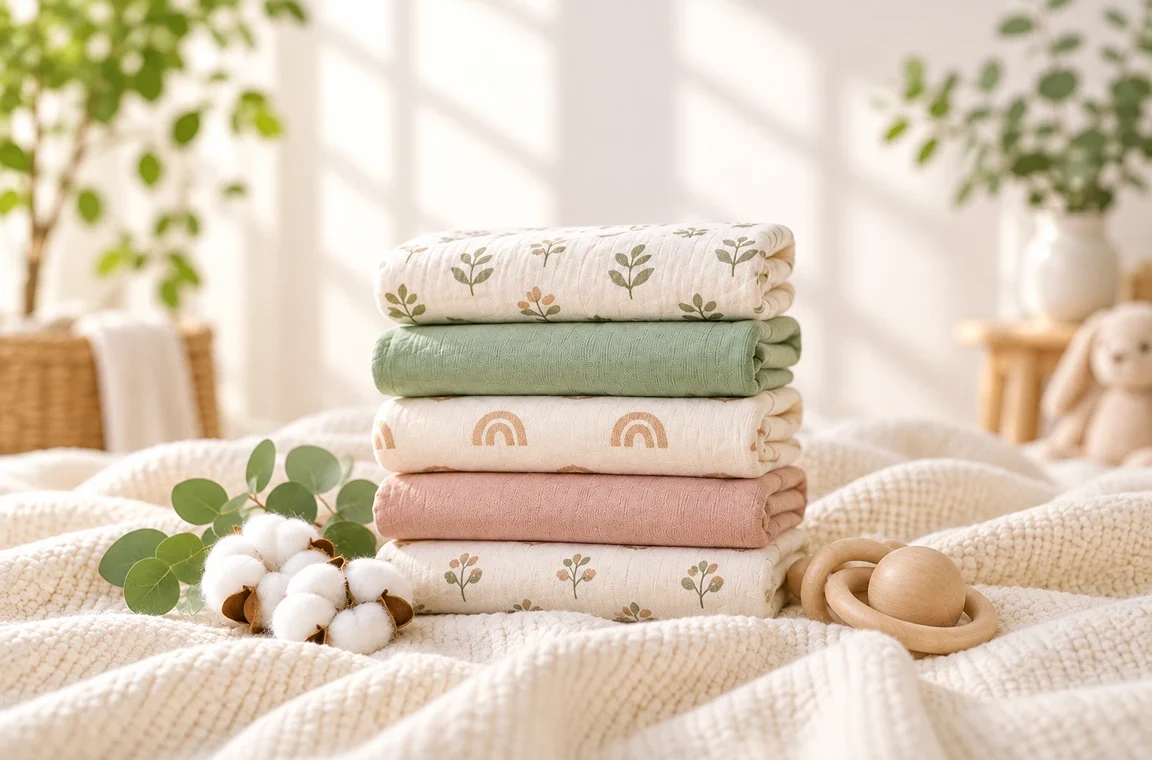
Cotton Muslin: Lightweight and airy, making it particularly suitable for swaddles, wraps and lightweight baby accessories.
Linen: Known for its breathable structure and suitability for warm-weather products.
Bamboo-derived fabrics: Often selected for their soft hand feel, although buyers should evaluate the actual fibre composition and manufacturing process rather than relying only on marketing terminology.
The best fabric depends on the product, target market, climate, price point and required performance.
4. Premium Fabrics Can Improve Product Longevity
Baby clothing goes through frequent washing because of spills, feeding, drooling and everyday messes.
The American Academy of Paediatrics recommends considering washability and durability when purchasing everyday baby clothes.
For brands and importers, this becomes even more important. A garment may look attractive at first but lose shape, softness or colour after repeated washing if the fabric and construction are not appropriately selected.
Premium sourcing should therefore consider:
- Shrinkage control
- Colour fastness
- Fabric recovery
- Seam strength
- Stitch density
- Pilling resistance
- Wash performance
5. Fabric Safety Matters in Babywear
Choosing a natural fibre does not automatically mean that every finished garment meets every safety requirement.
Dyes, finishes, prints, accessories and manufacturing processes can all affect the final product.
For this reason, international buyers may request appropriate testing or certifications depending on their destination market and product requirements.
For example, OEKO-TEX® Standard 100 and GOTS address different aspects of textile production and product requirements. Buyers should verify the exact certification, scope and validity rather than relying simply on terms such as “natural” or “safe.”
For export businesses, documentation and traceability can therefore be an important part of a professional sourcing process.
6. Better Fabric Selection Creates Better Baby Products
Fabric quality should always be considered together with garment construction.
A premium baby garment may combine:
- Soft-touch fabric
- Comfortable seams
- Appropriate GSM
- Baby-friendly construction
- Secure fasteners
- Carefully selected trims
- Quality stitching
- Suitable prints or embroidery
- Proper finishing
- Appropriate packaging
For example, front-opening or easy-access designs can make dressing and changing easier. The American Academy of Paediatrics also highlights front-opening garments and designs that make diaper changes easier.
7. Premium Natural Fabrics for International Babywear Buyers
For importers, wholesalers, retailers and private-label brands, selecting a supplier involves more than choosing a fabric.
International buyers may need flexibility in:
- Fabric composition
- GSM
- Colores
- Prints
- Sizes
- Patterns
- Labels
- Packaging
- Private-label branding
- Product specifications
- Order quantities
- Destination-market requirements
India has an established textile and garment ecosystem, allowing exporters and sourcing partners to develop products across different fabric qualities and specifications.
At Aydara Global, our approach is focused on helping international buyers source baby products from India according to their product requirements. Depending on the project, specifications can be developed around fabric selection, product design, customization, branding and packaging.
How Should Buyers Choose the Right Baby Fabric?
There is no single fabric that is perfect for every baby product.
Instead, buyers should consider five important questions:
- Where will the product be sold?
Consider the destination country’s climate and consumer expectations. - What is the product?
A swaddle may require a different fabric construction from a winter garment. - What GSM is appropriate?
Lightweight fabrics may be suitable for summer products, while heavier constructions may work better for cooler conditions. - What certifications or testing are required?
Requirements vary according to the destination market, product category and buyer specifications. - How will the garment be used and washed?
Everyday babywear should be evaluated for durability and wash performance.
Why Choose Aydara Global for Baby Product Sourcing from India?
For international buyers looking for baby clothing and textile products from India, Aydara Global focuses on product development and sourcing based on buyer requirements.
Our product categories can include babywear and baby textile products such as:
- Bodysuits
- Rompers
- Onesies
- Tees and bottoms
- Newborn sets
- Swaddles
- Baby accessories
- Crochet toys
- Gift and retail packaging
Buyers can discuss requirements such as fabric composition, GSM, colours, prints, sizing, stitching, branding, labels and packaging according to their target market and product concept.
The objective is simple: help buyers develop baby products that balance comfort, quality, appearance, functionality and commercial requirements.
Conclusion
Choosing premium cotton and natural fabrics for baby products is ultimately about making informed decisions at every stage of product development.
Softness, breathability, moisture management, durability, construction and appropriate testing all contribute to the quality of a finished baby product. Cotton remains a versatile choice for many babywear applications, while fabrics such as muslin and other natural-fibre options can provide different characteristics for specific products.
For international buyers, the best approach is not simply to ask whether a fabric is “natural” or “premium.” Instead, evaluate its composition, construction, GSM, finishing, performance, testing, certifications and suitability for the target market.
For brands, retailers and importers sourcing baby products from India, working with a sourcing and export partner that can understand detailed product specifications can make the development process more efficient.
Looking to source premium baby clothing and natural-fabric products from India? Contact Aydara Global to discuss your product requirements, customization and private-label opportunities.
Frequently Asked Questions (FAQs)
1. Which fabric is best for baby clothing?
Cotton is one of the most widely used choices for baby clothing because it is soft, versatile and breathable. The appropriate fabric ultimately depends on the product, climate, construction and intended use.
2. Is premium cotton suitable for newborn clothing?
Yes. Soft cotton fabrics are commonly used for newborn garments and products that have direct contact with a baby’s skin. Fabric construction, finishing and garment quality should also be considered.
3. Is cotton suitable for babies in hot climates?
Lightweight and breathable cotton can be particularly suitable for warm climates. The American Academy of Paediatrics recommends lightweight cotton clothing in hot conditions and advises avoiding excessive layers.
4. What is cotton muslin used for?
Cotton muslin is commonly used for lightweight baby products such as swaddles, wraps, blankets and other breathable textile accessories.
5. Is natural fabric automatically safe for babies?
Not necessarily. “Natural” describes the fibre source, but the finished textile may also involve dyes, finishes, prints and other components. Buyers should consider appropriate testing and certifications for their market.
6. What should international buyers check before importing baby clothing from India?
Buyers should consider fabric composition, GSM, sizing, colour fastness, shrinkage, stitching, finishing, packaging, labelling, testing and destination-market requirements.
7. Can baby clothing be customized for private labels?
Yes. Depending on the supplier and project, babywear can be developed with customized fabrics, colours, prints, sizes, labels, branding and packaging.
8. Can Aydara Global help international buyers source baby products from India?
Aydara Global works with buyers seeking baby products and textile solutions from India and can discuss requirements such as product specifications, customization, branding and packaging according to the project.
9. What makes premium babywear different from ordinary babywear?
Premium babywear generally places greater emphasis on fabric quality, softness, construction, finishing, durability, design details and consistency. The exact specifications should be defined according to the buyer’s requirements and target market.
10. What should I ask an Indian babywear exporter before placing an order?
Ask about fabric composition, GSM, available customization, sample development, minimum order quantities, testing or certifications, packaging, lead times, quality control and export documentation.